Sunday, June 29, 2014
High Expectations
This blog will explain how I am going to communicate high expectations to my students. Come back later to see how I can achieve this in a high school mathematics classroom.

Sunday, June 15, 2014
Writing Lesson Plans...
When it comes to writing lesson plans, all teachers can think of is work,Work, WORK!! Successful lesson plans need to be thought out very carefully and tailored to fit your classroom. Each of your classes have a different groups of students with different capabilities. You may encounter a class that understands the lesson quicker than others. If you run into a class like this, you need to have a lesson plan that has other activities (maybe they are more challenging, maybe they are different, or maybe you move to the next lesson). As a teacher, being prepared with your lesson plans and the ability to change the classroom based on your students level is extremely important.
My favorite part about writing a lesson plan is finding the anticipatory set! I think that the anticipatory set is the most important part of the lesson plan. Why you ask??? Well as a soon to be high school mathematics teacher, I feel that students do not have much interest in mathematics because they cannot relate to the process. Students also have a hard time seeing the end product, the reason why we learn the concepts in mathematics. As a teacher creating or finding the anticipatory set, I am finding the reason why students should be focusing on what I am teaching them. It is the hook of the lesson! I have to catch the students attention and Keep it! Whether I do this through a problem students often face or I find a really great YouTube video that keeps the kids excited about learning.
My least favorite part of lesson planning is deciding what standards I can hit with every lesson. I think that choosing the standards is the most tedious part of the lesson. Often times the standards are written in awkward language and are hard to interpret. Also, when it comes to mathematics, most of the time the students that come into the classroom are behind so I have to teach them standards that they were supposed to learn from last year or a few years ago.
I believe that when I am able to start teaching these lesson plans in a classroom I will be able to determine if I need more structure or options in certain areas. I also feel that my format of lesson planning may change as I accumulate more years of teaching experience.
This is one of my assignments to receive my teaching credential. If I were to write this module that we just concluded. I would include a group assignment, which groups everyone based on their area. This assignment would have us all write a lesson plan. After we have all written our lesson plans, we would meet and talk about all of our lesson plans. (What we liked? What we didn't? Give each other ideas about the parts of our lesson plans. Talk about our experiences of trying certain things in the classroom.)
Sunday, June 1, 2014
Sunday, May 25, 2014
Video on Observed Classroom with Differentiated Instruction
Check out my video on my experiences with differentiated instruction!
Sunday, May 18, 2014
Review of Standards, Objectives, and Lesson Plans

Speaking of standards, there is one big deal that is happening all over the United States this year... Yep, you guessed it.

The standards that I chose came from the Common Core State Standards from California for high school mathematics. To start the backwards mapping of a standard, first we defined three possible student performances for the standard that we chose. After we picked possible student performances, we described at least two teaching strategies to help students meet the standards. Then we identified two assessments that would show that the students have met the standard. For example, I chose the standard:
 G-GMD- Explain volume formulas
and use them to solve problems-3
G-GMD- Explain volume formulas
and use them to solve problems-3
Use volume formulas for
cylinders, pyramids, cones, and spheres to solve problems.
My possible assessments included:
Quiz on problems that use the formulas for a
cylinder, pyramid, cones and spheres.
Group assignment for students to solve a real
world word problem describing the steps in solving the problem.
Originally, I felt that this assignment was not going to be challenging. However, when sitting down to do the assignment I found that I had to pick out the standard and then stop for a while to think about what the best strategies, performances, and assessments would work best for each of the standards. I know that as a future teacher I will also have to think about what would best fit for the students that I am teaching the standard. This an extremely important lesson for me to learn as a first year teacher, so I am glad that I can make a note of it now for future reference.

Our next assignment was a group assignment that involved choosing two English Language Arts standards and unpacking the standards. There are many strategies to unpack standards. The strategy that my partner and I chose to use is: First you need to identify the concept or concepts of the standard, the what. Then you look to find what the standard wants you to do with these concepts, the verb or the how. Lastly look to see if the standard gives you a context, the where. There are many strategies when unpacking standards. Some strategies include talking about the standards big idea or ideas. The big idea is the main point or points of a standard. This allows the teacher to glance at their standard and understand where it would fit in their lesson plans.
One of the standards we chose is: Reading Standards for Literature K–5
Standard 2: (Key Ideas and Details) Recount stories, including fables, folktales, and myths from diverse cultures; determine the central message, lesson, or moral and explain how it is conveyed through key details in the text. (“Common Core State Standards”)
This is what it looked like when we unpacked the standard:

At first, I felt that this assignment would be difficult for me because we were unpacking English standards and I am more of a mathematics girl. However, I had a great partner who had great ideas and help me accomplish the task.
The last assignment required that we write objectives for one of the standards that we unpacked. I chose to

Students
will be able to recount the story of Heracles in Greek mythology, by understanding
sequential order.
Students
will be able to distinguish the different genres: fables, folktales and myths.
Students
will be able to determine the central message, lesson, or moral of the story,
by asking “What did the character learn in this story?”.
Students will be able
to explain how the message is being conveyed through key details in the text.

For this assignment, I was unsure that I could be successful at creating objectives. I wish that we could have chosen a standard from our grade level and subject. However, by having to create objectives for a different age group and subject it pushed me out of my comfort zone and allowed me to turn to the internet for some guidance on the assignment. I learned that there are many tools and websites that allow a teacher to help themselves and their students by getting new ideas. I think that other teachers insights are a great tool to help you create the best objectives and environment for your students.
Sunday, March 30, 2014
Classroom Culture

As an incoming high school mathematics teacher the classroom
culture is critical to my success and to the ability of the students to
learn. The trick is to balance the rules
and organization without stifling the students desire to learn. A classroom must be a place of safety that
allows students to open their hearts and minds for learning. The rules must clearly state what behavior is
unacceptable while allowing the student enough freedom to escape the
traditional constraints and open his mind to new possibilities in
education. In my classroom, I will
discourage bad behavior and reward good behavior, innovative thinking, group
discussions, openness, and learning.

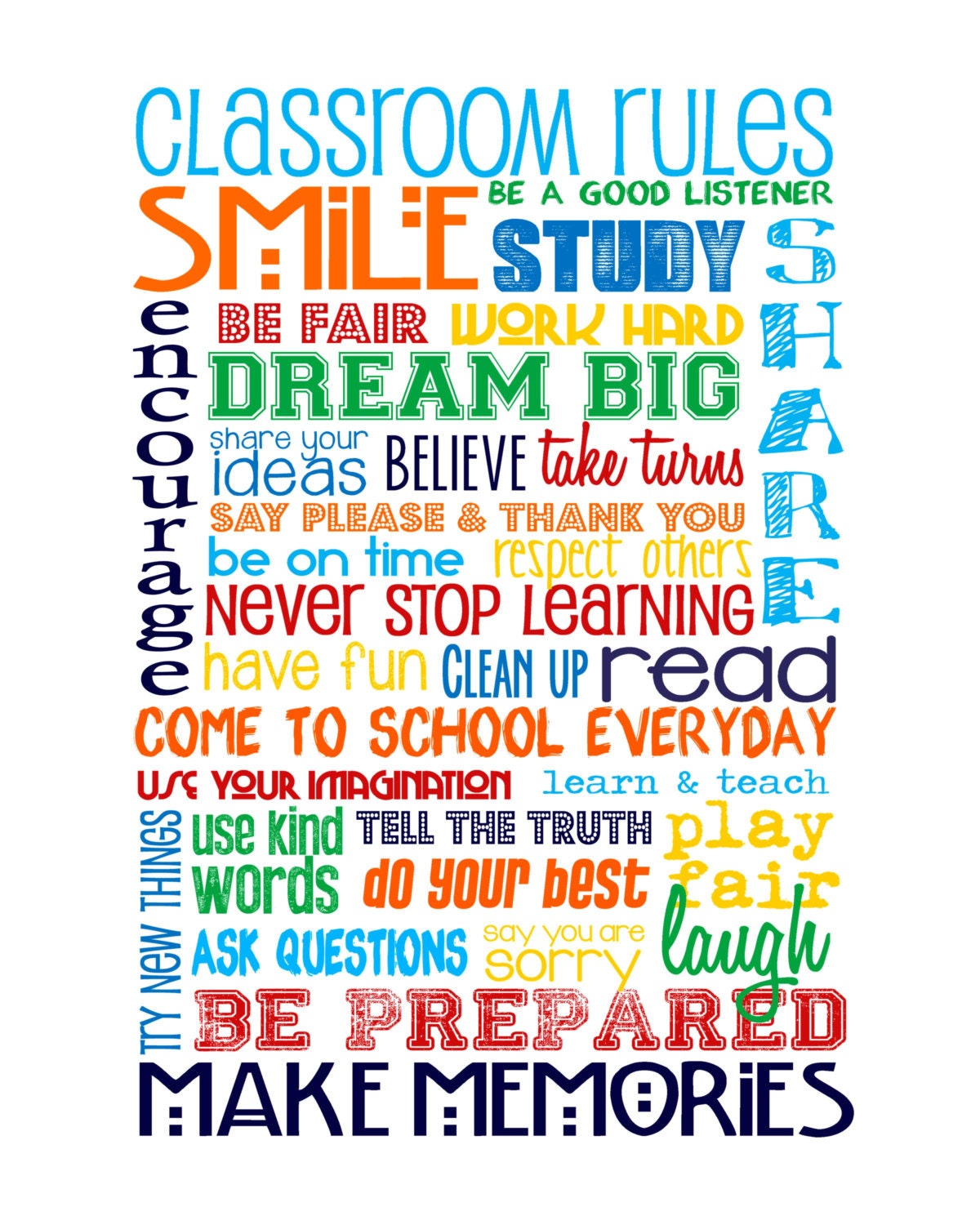
Class control is extremely important. I believe that rules and structure provide
one necessary component of class control but the culture of the classroom must
be developed for a student to want to go to class. The concept of an ideal classroom , at least
in my mind, includes a culture that promotes happiness in learning. Students should want to come. They should believe that I care about them
and know each one of them individually.
I want to be the students support and mentor for advancing their skills
in math. Math is extremely important in
the new economy and students who do not learn math will not be able to
participate in many jobs within the economy.
The students are our future and we need to arm them with the knowledge
they need for success in life. The
classroom culture should harness technology, reward innovation, support
individuals, solve problems in groups, and create a desire to learn more. I hope that my students want to come to my
class. If I spend all of my time focused
on broken rules I will have failed. I
want my classroom environment to be so interesting and innovative that students
want to come even if hard work is required.

Rules have to be followed but should not be the focus of our
classroom. Our purpose is to learn. I will use innovative teaching methodologies
and technology to interest the students.
Many students in math have already developed an aversion to the subject
area. Many students, and the majority of
female students, do not feel that they can excel in math. I want my classroom to be the place they can
break through the barrier and build a foundation.
In order to have an effective classroom with a positive and
caring environment the teacher must also follow
certain rules.
Rules for the teacher:
-
Talk to your students by using their first name.
-
Start and end class on time.
-
Reward learning behaviors.
 -
Arrange the environment for group and individual
work sessions.
-
Arrange the environment for group and individual
work sessions.
-
Provide a safe environment for all students.
o
No Bullying Zone
o
Work Together
o
Keep Trying!
o
If you fail, don’t quit, try again.
-
Integrate technology and innovative teaching
methods.
-
Make every student feel important.
-
Communicate your expectations.
-
Communicate rewards and praise.
- Ask for student participation and opinions.
- Be Available for students.
- Work with the math club.
- Show the students why I love math!
- Use a new method if the students do not understand the lesson.
- Ask for student participation and opinions.
- Be Available for students.
- Work with the math club.
- Show the students why I love math!
- Use a new method if the students do not understand the lesson.
-
Encourage your students!
References:
1. Teaching Tolerance. Culture in the Classroom | Teaching Tolerance. Retrieved March 25, 2014, from http://www.tolerance.org/supplement/culture-classroom
2. Center for Teaching and Learning. Positive Classroom Climate | Center for Teaching and Learning. Retrieved March 25, 2014, from http://cte.udel.edu/publications/handbook-graduate-assistants/getting-started/positive-classroom-climate.html
3. Teacher Certification, Teaching Certificate, Teacher Education & Training. Maintaining a Positive Classroom Environment.Retrieved March 25, 2014, from http://www.teachercertification.org/a/maintaining-a-positive-classroom-environment.html
4. Kelly, M. Secondary Education | Teaching Strategies and Resources for Educators. Creating a Positive Learning Environment. Retrieved March 26, 2014, from http://712educators.about.com/od/classroomhelpers/tp/Creating-A-Positive-Learning-Environment.htm
5. Dennis, K. Kelly Dennis: Chapter 7: A positive classroom environment. Retrieved March 26, 2014, from http://sitemaker.umich.edu/keldenn/chapter_7__a_positive_classroom_environment
3. Teacher Certification, Teaching Certificate, Teacher Education & Training. Maintaining a Positive Classroom Environment.Retrieved March 25, 2014, from http://www.teachercertification.org/a/maintaining-a-positive-classroom-environment.html
4. Kelly, M. Secondary Education | Teaching Strategies and Resources for Educators. Creating a Positive Learning Environment. Retrieved March 26, 2014, from http://712educators.about.com/od/classroomhelpers/tp/Creating-A-Positive-Learning-Environment.htm
5. Dennis, K. Kelly Dennis: Chapter 7: A positive classroom environment. Retrieved March 26, 2014, from http://sitemaker.umich.edu/keldenn/chapter_7__a_positive_classroom_environment
Sunday, March 23, 2014
My 5 Digital Tools to Engage Your Students!
Check out my video that shows my top 5 digital tools that your students will be excited about!!
Check out each of these tools websites:
5. Wolfram Alpha http://www.wolframalpha.com/about.html
4. Prezi http://prezi.com/about/
3. Twitter https://about.twitter.com/
2. ThingLink http://www.thinglink.com/learn
1. BrainPOP http://www.brainpop.com/about/tour/
Subscribe to:
Posts (Atom)